Showing posts with label Biology. Show all posts

Differences between Biodegradable and Non-biodegradable substances:

  1. Biodegradable is referred to all those things that can be easily decomposed by natural agents. Natural agents include water, oxygen, ultraviolet rays of the sun, acid rains, microorganisms, etc. On the other hand non-biodegradable substances are never broken down or decomposed by environmental factors.
  2. Biodegradable substances include food waste like vegetable and fruit peels, dead plants and animals, chicken, egg shells, paper materials, garden waste etc. Non-biodegradable things consist of  plastics, polystyrene, metals, plastic and aluminum cans, toxic chemicals, paints, tyres, etc.
  3. Biodegradable substances on breaking up are converted into simple organic matter and are thus assimilated in the soil and thus becomes a part of the carbon cycle of the atmosphere. On the contrary, non-biodegradable substances are resistant to the environmental factors and never decompose and instead contribute to majority of the solid waste.
  4. Biodegradable substances may decompose within few days or months while non-biodegradable items may take thousands of years or may never ever be broken down and remain in their original form as it is.


Difference Between Living and Non-Living Things

BASIS FOR COMPARISONLIVING THINGSNON-LIVING THINGS
MeaningLiving things are the creatures that are alive and compose of tiny particles, i.e. cells.Non-living things refers to those objects or items, that do not exhibit any sign of life.
Exampleliving thingnon-living-thing
OrganizationHighly organizedNo such organization
ConciousnessThey sense things and react to external stimulus.Non-living things do not sense things.
HomeostasisMaintain a stable internal environment to make cells function.Do not maintain a stable internal environment.
MetabolismReaction like anabolism and catabolism occurs.No metabolic changes occurs in non-living things.
GrowthAll living things undergo a regulated growth.Non-living things do not grow.
EvolutionLiving things go through evolution.Non-living things do not undergo evolution.
SurvivalDepends on food, water and air for survival.Does not depend on anything for survival.
Life-spanHave a certain life span, after which they die.There is no such thing like life span.


Read more: http://keydifferences.com/difference-between-living-and-non-living-things.html#ixzz4RKFymY5j

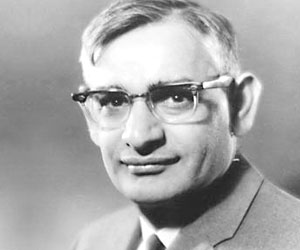
Har Gobind KhoranaBorn - 9 January 1922
Achievements - Har Gobind Khorana is an American molecular biologist, who was born to an Indian Punjabi couple. For his work on the interpretation of the genetic code and its function in protein synthesis, he was awarded the Nobel Prize in the year 1968. 

Har Gobind Khorana is an American molecular biologist born on 9 January 1922 to an Indian Punjabi couple. For his work on the interpretation of the genetic code and its function in protein synthesis, he was awarded the Nobel Prize in the year 1968. This award was, however, also shared by Robert W. Holley and Marshall Warren Nirenberg. The very same year, he received another award 'Louisa Gross Horwitz Prize' along with Nirenberg that was presented to them by the Columbia University.
 

Read this biography to learn more about Har Gobind Khorana, who became a citizen of the United States of America in the year 1966. In present times, he's residing at Cambridge in Massachusetts, United States as a part of the MIT Chemistry faculty. Har Gobind Khorana was also the first to produce oligonucleotides, which is chains of nucleotides. He was also the first person to segregate DNA ligase, an enzyme that connects sections of DNA together. 

These custom-designed portions of artificial genes are extensively used in biology labs for sequencing, cloning and engineering new plants and animals. This invention by Dr. Khorana has become automated and commercialized so that anyone now can order a synthetic gene from any of a number of companies. Thus, this is the history of the life of Dr Har Gobind Khorana as a biologist.

The progress of human civilisation has, to a great extent, been moulded along the lines of development of the biological science. Man is a social creature. People live in towns and cities. This has created several health problems such as supply of pure water, disposal of sewage and prevention of contagious diseases, so that they may not break out in epidemic form. These problems are best solved by biology.
Bacterial enemies of man have been discovered, and remedies against their spread and destruction are now possible by vaccination and other measures. No longer do plagues bring terror to a district. Penicillin, streptomycin, terramycin, Chloromycetin, aureomycin, etc., are the magic bullets to shoot down the microbes, and all of them are the gifts of the biological science to mankind.
Life-histories of animal parasites invading man, and of animals which quickly transmit them to a town-dwelling community by acting as carriers have been worked out and effective measures for their control have been planned. Moreover, an expert biological knowledge is essential for selecting the right kind of raw materials for the manufacture of drugs, because most of them are either vegetable or animal products.
The few facts that are mentioned here serve to illustrate how biology may be applied to mitigate human sufferings and increase the life span of man. Modern man, unlike his primitive ancestors, does not depend upon fishing and hunting.
He cultivates plants and rears fishes as well as cattle to get his food and other necessities of life. This has resulted in the development of agriculture, fishery and animal husbandry which are applied aspects of the basic biological science. Better and productive varieties of crop plants such as rice, wheat, jute, sugar-cane, cotton and pulses Eire now bred experimentally and distributed throughout the country.
Disease-resistant grains are raised and seeds are vernalized by special treatments so as to yield the crop before the usual time of harvesting. Soil is saved from exhaustion by crop-rotation.
Image result for biology
Fishes are now reared in fisheries and the small fry distributed to fishermen with proper scientific instructions for growing them. Life-histories of the more important food-fishes are explored and suitable kinds are bred. Fishing industry has been improved by employment of adequate catching devices, such as traps and nets.
Trawlers are used for fishing in the open sea, so as to increase the number of catches, and fish-oils are manufactured as side products. We are really proud of the fact that during last few years spectacular advances have been made in agriculture in our country.
Employing scientific methods by way of selection of better seeds, adequate application of manures and improved irrigation facilities agricultural practices have been practically revolutionised. Similar improvements have also been made in fisheries, silk-producing insects and diaries.
Silk industry has been greatly improved by sericulture. In this, better kinds of silk moths are experimentally bred with a view to increasing the rigidity, fineness or other qualities of the silk produced by them. Biology, therefore, has contributed largely towards obtaining better varieties and larger yields of food and other human necessaries.
Forests and wild game-animals are national resources from which man derives useful materials such as timber, fur and even food. Climate and crop position of the country depend, to a certain extent, upon the biological communities residing in perfect harmony amongst the forests.
Proper and judicious conservation of the natural resources demands a fundamental knowledge of the principles of biology, so that they may be utilised at the right moment.
Successful plant breeding, animal husbandry and con­servation of forests are effective means for checking famine which is a scourge of the human society. Man has three powerful adversaries to fight with. These are famine, disease and death. Biology is an effective weapon against each of these three human terrors.

1. A small palm-like tree.
2. Plant body differentiated into root, stem and leaves; the roots are of two types- normal and coralloid.
Image result for pinus cycas tree3. In the beginning the stem is tuberous, later on becomes columnar, un-branched and covered with persistent leaf bases.
4. Leaves large and compound with circinate vernation; leaf crown on the top of the plant.
5. Xylem consists of tracheids; companion cells absent from phloem; secondary xylem tracheids do not possess spiral thickenings.
6. No resin canals; mucilage canals present in the mesophyll tissue.
7. Root stele diarch to tetrarch.
8. Girdle traces present in the cortex of stem.
9. During secondary growth several successive rings of cambium are formed; the primary cambium is short lived; secondary cambium rings form concentric zones of xylem; no annual rings.
10. Mesophyll tissue differentiated into palisade and spongy tissue; no peg-like infolding’s; xylem mesarch in the midrib.
11. Transfusion tissue well developed in the leaves.
12. Vegetative reproduction by buds or bulbils.
13. Plants usually dioecious; cones simple and unisexual.
14. Sporophylls differ from foliage leaves, arranged in cones, i.e., male and female cones..
15. Microsporophyll triangular, woody, not peltate bearing numerous microsporangia.
16. Male cone terminal, large bearing numerous microsporophylls.
17. Microspores (pollen) not winged.
18. Female cone has a whorl of loosely arranged megasporophylls.
19. Each megasporophyll quite large in size, bearing 1-5 pairs of big ovules.
20. Ovule bears 1-2 integuments.
21. One megaspore (embryosac) in each megasporangium (ovule).
22. A sharp nucellar beak and a pollen chamber.
23. Nucellus free in the upper part or through out and not fused with the integument.
24. At the time of fertilization the embryo sac consists of a gametophyte having many food laden cells and 2-3 archegonia.
25. 3-celled pollen are shed from the pollen sacs and pollinated by wind. Pollen grains are caught in the mucilage drop oozing out from the micropyle. As the drop dries the pollen are taken back into the pollen chambers.
26. Pollen deposited directly on the nucellus during pollination; further development of pollen is completed in pollen chamber.
27. Microspore germinates in situ (within microsporangium) while the germination is completed on the nucellus after pollination.
28. The microspore cuts off only one prothallus cell, which is persistent (male gametophyte).
29. Generative cell produces two male gametes while large vegetative cell gives rise to tube cell and stalk cell.
30. The male gametes are large and multiflagellate.
31. The motile sperms move in the pollen tube and reach the neck of the archegonium; here the pollen tube acts as haustorium.
32. The female gametophyte is formed by the free nuclear di\i- on of the nuclear embryo sac cell; wall formation starts when numerous (1000) nuclei nave been formed within the megaspore
33. The megaspore germinates inside the megasporangium (ovule).
34 Female gametophyte bears 3-6 archegonia per ovule; neck present; no ventral canal cell: ventral nucleus present.
35. Female gametophyte parasitic on nucellus.

Morphology of Pinus tree


Pinus:Image result for pinus cycas tree

1. A tall, branched tree.
2. Plant body differentiated into root, stem and leaves; tap roots and mycorrhizic roots.
3. Stem cylindrical, branched; the branches are of two types, i. e, branches of limited growth (dwarf shots) and branches of unlimited growth (long shoots).
4. Leaves needle-like and grow on dwarf shoots; no circinate vernation.
6. Resin canals present; no mucilage canals.
7. Root stele diarch to hexarch.
8. Girdle traces absent.
9. Secondary growth; the cambium ring is persistent and produces a continuous cylinder of secondary xylem; annual rings are formed.
10. Mesophyll not differentiated into palisade and spongy tissue; mesophyll cells have peg-like infoldings; two vascular bundles with endarch xylem.
11. Transfusion tissue less developed.
12. No vegetative reproduction.
13. Plants usually monoecious; cones simple and unisexual.
14. Sporophylls arranged in male and female cones.
15. Microsporophyll scaly, not peltate, bearing two microsporangia.
16. Male cones small, grouped in clusters replace the dwarf shoot and not ma
17. Microspores (pollen) winged exine inflated to form balloon-like expans
18. Female cone compact and corresponds to an inflorescence; ovuliferous scale represents female flower.
19. Each megasporophyll or carpel is quite simple; each ovuliferous scale bears two ovules on its upper surface near the central axis.
20. Ovule bears single integument.
22. Pollen chamber and nucellar beak absent.
24. At the time of fertilization the embryosac consists of a gametophyte having many food laden cells bearing 2-3 archegonia.
25. Wind pollination; pollen grains enter the open ovuliferous scale and get entangled in the oozing mucilage drop from micropyle.
28. The microspore cuts off two prothallial cells towards the pointed end (male gametophyte).
30. Male gametes small non-motile.
31. The non-motile sperms are carried to the mouth of archegonia through pollen tube; pollen tube acts as sperms carrier and haustorium.
34. Female gametophyte bears one or two archegonia; no neck canal cell.
36. Usually a time interval of one year in between pollination and fertilization; fertilization occurs in the end of April; pollen tube reaches the neck of archegonium; the neck breaks and receives the contents from pollen tube; male nucleus fuses with the egg nucleus forming oospore.
38. Wall formation starts when eight-nucleate stage is attained.
39. Proembryo has four distinct tiers.
40. Four potential embryos, but only one matures; common occurrence of-cleavage polyembryony.
41. Perisperm present; numerous cotyledons in each seed; no aril; testa dry; endospermic.
42. Seeds winged.
43. Epigeal germination of seed. 


An ecosystem is a discrete structural, functional and life sustaining environmental system. The environmental system consists of biotic and abiotic components in a habitat. The synthesis and perpetuation processes involve energy exchange and this energy comes from the sun in the form of light or solar energy.

Thus, in any ecosystem, there are three functional components:
(i) Inorganic constituents (i.e., air, water and minerals)
(ii) Organisms (i.e., plants, animals and microbes), and
(iii) Energy input which enters from outside (i.e., sun).
These three interact and form an environmental system. Inorganic constituents are synthesized into organic structures by the green plants (primary producers) through photosynthesis and solar energy is utilized in the process. Green plants become the source of energy of renewals (herbivores) which, in turn become source of energy for the flesh eating animals (carnivores).
Animals, of all types grow and add organic matter to their body weight and their source of energy is complex organic compound taken as food. They are known as secondary producers. All the living organisms, whether plants or animals in an ecosystem have a definite life span after which they die.
The dead organic remains of plants and animals provide food for saprophytic microbes, such as bacteria, fungi, and many other animals. The saprobes ultimately decompose the organic structure and break the complex molecules and liberate the inorganic compounds into their environment. These organisms are known as decomposers.
During the process of decomposition of organic molecules the energy which kept the inorganic components bound together in the form of organic molecules gets liberated into the environment as heat energy. Thus, in an ecosystem energy from the sun, the input is fixed by the plants and transferred to animal components.
The ecosystems operating in different habitats, such as deserts, forests, grasslands and seas are interdependent on one another. The energy and nutrients of one way find their way into another, so that, ultimately all parts of the earth are interrelated, each comprising a part of the total system that keeps the biosphere functioning.
Thus, principal functions of ecosystems are as follows:
(i) Reception of radiant energy of sun.
(ii) Manufacture of organic materials from inorganic ones by producers.
(iii) Consumption of producers by consumers and further elaboration of consumed materials
(iv) After the death of producers and consumers, complex organic compounds are degraded and finally converted by decomposers and converters into such forms as are suitable for reutilization by producers.

Food Chain in an Ecosystem:

In the ecosystem, green plants alone are able to trap in solar energy and convert it into chemical energy. The chemical energy is locked up in the various organic compounds, such as carbohydrates, fats and proteins present in the green plants. All trophic levels in ‘an ecosystem is connected by transfer of food or energy.
The transfer of energy from one trophic level, e.g., producers, to the next trophic level, e.g., consumers, is called food chain. Thus, a food chain may be defined as the transfer of energy and nutrients through a succession of organisms through repeated process of eating and being eaten.
Mainly, food chains are of two types:
(i) Grazing food chain and
(ii) Detritus food chain.
i. Grazing Food Chain:
The grazing food chain starts from green plants and goes from herbivores (primary consumers) to primary carnivores (secondary consumers) and then to secondary carnivores (tertiary consumers) and so on. Cattle grazing in grasslands, deer grazing in forest, and insects feeding on crops and trees, are most common biotic constituents of the grazing food chain.
Autotroph → Herbivore → Primary carnivore → Secondary carnivore, etc..
ii. Detritus Food Chain:
The dead organic remains including metabolic wastes and exudates derived from grazing food chain are generally called detritus. The energy contained in detritus is not lost in ecosystem as a whole; rather it serves as a source of energy for a group of organisms called detrivores that are separate from the grazing food chain.
The food chain so formed is called detritus food chain. This begins with dead organic matter and passes through detritus feeding organisms (detrivores) in soil to organisms feeding on detritus-feeders.
In some ecosystems more energy flows through the detritus food chain than through grazing food chain. In detritus food chain the energy flow remains as a continuous passage rather than as a step wise flow between discrete entities.
In detritus food chain, there are many organisms which include algae, fungi, bacteria, slime molds, actinomycetes, protozoa, etc. Detritus organisms ingest pieces of partially decomposed organic matter, digest them partially and after extracting some of the chemical energy in the food to run their metabolism excrete the remainder in the form of slightly simpler organic molecules.
The waste from one organism can be immediately utilised by a second which repeats the process. Gradually the complex organic molecules present in the organic wastes or dead tissues are broken down to much simpler compounds, sometimes to carbon dioxide and water, and whatever is left that is humus. In a normal environment the humus is quite stable and forms an essential part of the soil.
Detritus food chain

Powered by Blogger.

Visitors

Print Friendly Version of this pagePrint Get a PDF version of this webpagePDF


 download University Notes apps for android

Popular Posts

Flag Counter