Showing posts with label Pharmacology. Show all posts
Blood brain barrier: (BBB)
  • A physical / functional barrier which does not permit ionized and non lipid soluble drugs to pass through into the Central Nervous System
  • It is mainly formed by the endothelial cells of the CNS blood vessels. Its purpose is to protect the brain from the chemical environment of the rest of the body due to the delicate balance between excitation and inhibition maintained within the CNS.
  • The brain capillaries do not contain fenestrations (holes). There are more tight junctions in brain capillaries decreasing the rate of diffusion through interstitial spaces. Glial cells ensheath the brain capillaries providing a second set of cell membranes which must be traversed as well as a second intracellular compartment where cellular metabolic processes can transform entering substances
  • Chemical or enzymatic barrier - MonoAmineOxidase, cholinesterase - This barrier prevents 5 HT, catecholamines, ACh from entry into CNS
  • Carrier mediated transport – to facilitate exit of drugs
  • Highly lipophilic drugs enter easily because they cross membranes. (Fig. 18) Unionized forms of drugs enter more easily than ionized forms. Penicillin, streptomycin, gentamicin – do not cross the BBB
  • Chloramphenicol - can cross the BBB

Biotransformation reactions can lead to any one of the following:
  • Inactivation – most drugs are rendered pharmacologically inactive
    • Example: Many drugs - morphine, chloramphenicol, procaine etc.
  • Formation of active metabolite – the metabolite formed possesses biological activity
    • Ciprofloxacin from enrofloxacin
    • Oxyphenbutazone from Phenylbutazone
    • Salicylic acid from aspirin
  • Inactive drug to active drug (Prodrug) An inactive drug gets converted into an active metabolite once it undergoes biotransfomation inside the body
    • Example:
      • Hetacillin to ampicillin 
      • Prontosil to sulfanilamide
  • Less active or inactive drug is converted into a more toxic drug (Lethal synthesis)
    • Example:
      • Parathion to paraoxon
      • Fluoroacetic acid to fluorocitrate

The chemical alteration of drugs in the body 

  • To render nonpolar lipid soluble compounds into polar water soluble compounds to enhance their excretion from the body
  • Intended to protect body from the foreign substances by making them less toxic and easily excreted
  • Primary site - liver
  • Other important sites are kidney, intestine, lungs and plasma
  • General Pattern of biotransformation - biphasic
Biotransformation

  • Drug is any chemical agent except food that is used to promote or safeguard the health of human beings or animals. It is also defined as any substance or product that is used or intended, to be used to modify or explore physiological systems or pathological states for the benefit of the recipient. The word drug is derived from a French word ‘Drogue’ meaning a dry herb.
  • Over the counter drugs are those preparations that can be sold without any prescription because they can be adequately labeled for layman use.
  • Prescription drugs are drugs that can be used only on the order of a licensed veterinarian/physician/dentist/surgeon based on a prescription. They are also known as legend drugs.
  • Essential drugs are agents that satisfy the healthcare needs of majority of the population. They should therefore be available at all times in adequate amounts and in appropriate dosage form.
  • Pro-drugs are drugs that are inactive or have a low order of activity in the form administered and are metabolised to the active form in the body.
  • Hard drugs are drugs used for non-medical purposes that are liable to disable the individual seriously as a functioning member of the society by inducing severe psychological and/or physical dependence. eg. Heroin
  • Soft drugs are drugs used for non-medical purposes that are less dependence producing. There may be psychological dependence but not physical dependence, except with heavy dose. eg. Amphetamine.
  • Nootropic drugs are drugs that affect the intellect. These drugs are claimed to enhance learning, increase brain resistance to stress including hypoxia and stimulate brain metabolism especially in senile patients. eg. Piracetam
  • Orphan drugs are drugs or biological products useful for diagnosis/treatment/prevention of a rare disease condition for which there is no reasonable expectation that the cost of developing and marketing it will be recovered from the sales of that drug. Eg. Acetylcysteine. These drugs may be life saving for some patients, but are not commercially available.
  • Placebo is a vehicle for cure by suggestion and is surprisingly often successful though only temporarily. It can be used as a control in scientific evaluation of drugs and to benefit or please a patient not by pharmacological actions but by psychological means (Latin: Placebo – I shall be pleasing or acceptable). Placebo reactor is an individual who report changes of physical and mental state after taking a pharmacologically inert substance.

  • Neuropharmacology is the study of neurophysiological or neurobiochemical functions of the nervous system including the brain, spinal cord, and the nerves that are modified by drug action.
  • Cardiovascular pharmacology concerns the effects of drugs on the heart, the vascular system, and those parts of the nervous and endocrine systems that participate in regulating cardiovascular function.
  • Molecular pharmacology deals with the biochemical and biophysical characteristics of interactions between drug molecules and those of the cell. It is molecular biology applied to pharmacology and toxicology .
  • Biochemical pharmacology is the study of action of drugs and drug metabolism, how drugs interact with, and influences, the physiology of the organism.
  • Behavioral pharmacology studies the effects of drugs on behavior of organism. It includes topics such as the effects of psychoactive drugs on the phenomena of learning, memory, wakefulness, sleep and the behavioral consequences of experimental intervention in enzyme activity and brain neurotransmitter levels and metabolism.
  • Endocrine pharmacology is the study of drugs that are either hormones or hormone derivatives, or drugs that may modify the sections of normally secreted hormones.
  • Clinical pharmacology is the application of pharmacodynamics and pharmacokinetics to patients with diseases, it also includes pharmacogenetic component. Clinical pharmacologists study how drugs work, how they interact with the genome and with other drugs, how their effects can alter the disease process, and how disease can alter their effects. Clinical trial design, the prevention of medication errors, and the optimization of rational prescribing are critical components of clinical pharmacology.
  • Chemotherapy is the area of pharmacology that deals with drugs used for the treatment of microbial infections and malignancies. Chemotherapeutic agents selectively inhibit the growth of, or kill, the infectious agent or cancer cell without seriously impairing the normal functions of the host.
  • Toxicology is the science of adverse effects of chemicals/ drugs on living systems. It also includes problems of drug safety, effects of drug over dosage.
  • Pharmacy is a separate discipline in the health sciences. It is the profession responsible for the preparation, dispensing and appropriate use of medication, and provides serv ices to achieve optimal therapeutic outcomes.

I share a PDF Document for you containing WHO Model List of Essential Medicines.

It contain all essential medicine. I share it for medical and veterinary student.
All the sources are included in Document.


WHO Model List of Essential Medicines is published by the World Health Organization (WHO). The first list, published in 1977, included 204 pharmaceutical drugs.  The WHO updates the list every two years. The WHO later added a separate WHO Model List of Essential Medicines for Children up to 12 years of age. As of 2016, at least 156 countries have created national lists of essential medicines based on the WHO’s model list. The national lists contain between 334 and 580 medications. In April 2015, the WHO published the 19th edition of the adult list and 5th edition of the list for children.

 The following list is based on the 19th edition of the adult list:

1 Anaesthetics

 1.1 General anaesthetics and oxygen
1.1.1 Inhalational medicines
 • Halothane • Isoflurane • Nitrous oxide • Oxygen
 1.1.2 Injectable medicines • Ketamine • Propofol[note 1]

 1.2 Local anaesthetics

 • Bupivacaine • Lidocaine • Lidocaine + epinephrine • Ephedrine† (not a local anaesthetic, included in this list for prevention of hypotension associated with spinal anaesthesia during caesarean section)
1.3 Preoperative medication and sedation for short-term procedures
 • Atropine • Midazolam • Morphine 2 Medicines for pain and palliative care

 2.1 Nonopioids and nonsteroidal antiinflammatory drugs (NSAIDs) 

• Acetylsalicylic acid (aspirin) • Ibuprofen • Paracetamol[note 2] (acetaminophen) 2.2 Opioid analgesics • Codeine • Morphine

Befor get the whole pdf please like our facebook page for more information


WHO Model List of Essential Medicines Download.


Thank you.

Types of Antiviral Drugs:

Amantadine is a low molecular weight quantity which is operational along with-door to influenza virus A. It prevents optional accessory as dexterously as un-coating of endocytosed virions. It binds to the viral matrix proteins of influenza virus and thereby prevents the conformational changes required for un-coating. A connected merged Rimantadine has a related effect approaching influenza virus. A number of nucleoside analogues have been used as antiviral drugs. Among these are acyclovir, idoxuridine, ribavirin, vidarabine, trifluridine, azidothymidine etc.


Structures of Acyclovir and Deoxyguanosine


Structures of Acyclovir and Deoxyguanosine

Because of the structural sympathy of acyclovir and deoxyguanosine, the viral enzyme, nucleoside kinase phosphorylates acyclovir to its phosphate forming a traitorous nucleotide which cannot be incorporated into DNA i.e. DNA polymerization is inhibited. Acyclovir derivatives, gone famciclovir and ganciclovir are same in mode of operate .

Inhibition of Viral DNA Synthesis

Acyclovir and its derivatives have been found to be energetic adjoining herpes virus infections, particularly genital herpes. It has after that effect going approximately for chicken pox. Other nucleoside analogues have along with been used as antiviral drugs, taking into consideration idoxuridine (5-iodo-deoxyuridine), trifluridine, vidarabine (adenine arabinoside) etc.

Idoxuridine is a thymidine analogue  and is incorporated into viral DNA blocking bonus polymerisation of DNA. Vidarabine has structural empathy once deoxyadenosine and has a associated effect on the subject of viral DNA synthesis as idoxuridine. These drugs are mainly used in infections caused by herpes virus.

Structural Similarity along together in addition to Idoxuridine and Thymidine

 Structural Similarity between Idoxuridine and Thymidine

An important strategy of inhibiting retroviruses such as HIV is to block the moving picture of reverse transcriptase, the viral enzyme required for synthesis of DNA from the genomic RNA of these viruses. Reverse transcriptase is absent in the host cells. Several chemotherapeutic agents have been developed as potential reverse transcriptase inhibitor, such as zidovudine (azidothymidine, AZT), didanosine and zalcitabine.

These agents inhibit synthesis of DNA from viral RNA by specifically blocking the to-do of reverse transcriptase. They have been found useful in HIV infection causing AIDS. Zidovudine structurally resembles thymidine (Fig. 6.38).

Structure of Zidovudine

Didanosine and zalcitabine are less toxic than zidovudine. These agents exploit as competitive inhibitors of thymidine in the reverse transcription of viral genomic RNA to ds-DNA. As this step is vital for viral replication, these agents can effectively quantity uphill less viral multiplication in AIDS patients.

The mechanism of act appears to be the incorporation of the drug in the elongating DNA chain in area of thymidine, thereby inhibiting bonus count of nucleotide. The presence of the azide action in 3-viewpoint in place of an OH-outfit which is valuable for DNA polymerisation prevents chain elongation. Didanosine (dideoxyinosine) and zalcitabine (dideoxy- cytidine) have a thesame mode of produce an effect.

Another agent which inhibits reverse transcription of retroviruses is foscarnet (phosphonoformic cutting). It inhibits DNA polymerization by binding to the pyrophosphate receptor, in view of that that merger of nucleotides from the precursor nucleoside triphosphates into DNA cannot come clean place. Other reverse transcriptase inhibiting drugs add occurring nevirapine and delaviridine.

Another admittance to act HIV is to inhibit the viral protease which is essential for cleaving polyprotein molecules into fragments that are used for assembly of auxiliary viral particles. The protease inhibitors developed as potential drugs for HIV therapy complement indinavir, saquinavir and ritonavir.

The protease inhibitors are amino bitter analogues and they achievement as competitive inhibitors in the viral protease salutation. As a outcome, the long protein molecules cannot be cleaved to smaller ones required for virion assembly. Thus, assembly of progeny virions is prevented.

One of the best strategies to manage a viral disease would be to prevent the virus from entering the turn host cells. This could be achieved through vaccination which induces restructure of antibodies that would react taking into account the surface proteins of viral particles and would defer their relationships into the host cell. In recent time, antiviral drugs have been synthesized which fighting in a re same habit.

One class of these drugs is the neuraminidase inhibitors which are creature used adjoining influenza virus. The virions of influenza virus contain two types of spikes upon their envelope  one type contains haemagglutinin ruckus and the calculation type contains neuraminidase objection.

These spikes receive portion in add-on of influenza virus to the cells of the respiratory tract of the host. Neuraminidase inhibitors, bearing in mind zanamivir and oseltamivir phosphate, block optional connection of influenza virus particles by clogging the sites of the host cell surface where the virions could include.

The concern to the lead of these not well-disposed of-influenza drugs was only possible because the exact knowledge of biochemistry of extra of the virus to the host cell surface was known. This proves that considering strengthening of knowledge of viral infection in difficult, more and more operating antiviral drugs would be discovered. But till now, the most in pursuit behave adjoining viral diseases continues to be vaccination which induces both humoral (through antibodies) and cell-mediated (through killer T-lymphocytes) immunity in the body.

Most vaccines against viral diseases utilize inactivated or attenuated viruses. Such vaccines e.g. the Salk vaccine against poliomyelitis, uses alive viruses inactivated by formaldehyde, or Sabin vaccine, next against the same disease, uses attenuated viruses.

These vaccines have certain amount of risk, though intensely negligible, because the inactivation may not be 100 per cent, or in rare cases attenuated viruses may revert to their indigenous pathogenic form. In more recent years, sub-unit vaccines have been developed by genetic engineering.

For example, hepatitis B viral vaccine has been prepared by transferring the viral gene coding a capsid protein to yeast. The transgenic yeast produces the viral capsid protein which after unfriendliness and purification has been used to prepare the hepatitis B virus vaccine. The vaccine containing the capsid protein induces immunity against hepatitis B infection. These vaccines are sometimes called DNA vaccines, because they change recombinant DNA technology.

Target Sites for Antiviral Drugs

Antibiotics which have revolutionized the control of diseases caused by bacteria and some new pathogenic agents are utterly ineffective against viruses, because the viruses get your hands on not have a cell and they are heavily dependent a propos the host cell for multiplication.

Therefore, the desire sites at which antibiotics combat in bacteria are lacking in viruses. For example, the 3-lactam antibiotics bearing in mind penicillins and cephalosporins or cephamycins interfere following bacterial cell wall, a structure which is absent in animal cells.

Many antibiotics are targeted adjoining prokaryotic protein synthesis. Thus, antibiotics can selectively ill feeling those peculiarities of bacteria which are absent in the host cells. Development of breathing antiviral drugs similarly depends in symbol to searching out ample strive for sites.

The attainable targets for antiviral drugs could be:

(i) Attachment of the virion upon the host cell membrane. If the virus is prevented from association to the direct cell, the virus cannot multiply or cause any damage. As the virions interact subsequent to specific receptors puff upon the surface of the host cell, one strategy could be an antiviral drug which resembles the receptor chemically for that defense that the virion mistakes it as a real receptor and binds to it on the other hand of the objective cell.

An swap available could be to block the surface proteins of the virions, as a result that they can no longer interact as soon as the host receptor sites. Antibodies produced against viral surface antigens could support such a endeavor effectively.

(ii) Many animal viruses enter the host cells by an endocytic lane in which the virion  either when or without envelope  are endocytosed, and the un-coating and forgive of nucleic cutting understand place in the endocytic vesicle. A doable intention site of an antiviral drug could be prevention of un-coating.

(iii) Some viruses, along furthermore the retroviruses, carry enzymes in their virions which are needed for their replication and which are absent in the host cell. So, unorthodox strategy of antiviral drugs could be to inhibit those viral enzymes, so that replication of the virus could be prevented. Generally, nucleotide analogues possess handsome possibilities to be used as such inhibitors.


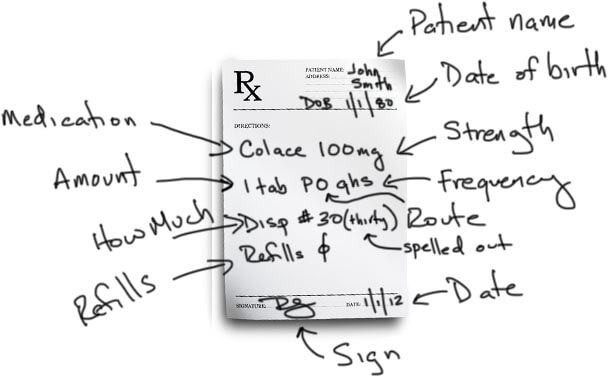
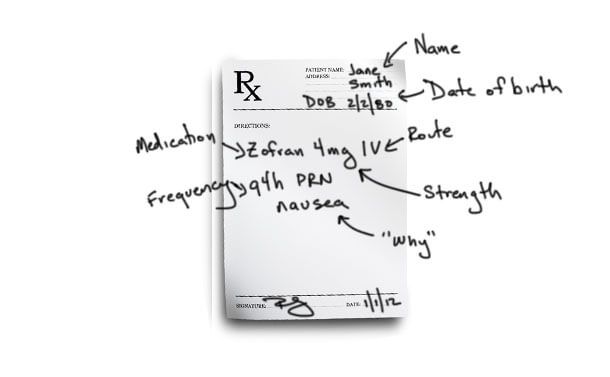
Prescription Writing 101 - Example
Prescription Writing 101 - Example 2A prescription is an order that is written by you, the physician (or medical student with signature by a physician) to tell the pharmacist what medication you want your patient to take. The basic format of a prescription includes the patient’s name and another patient identifier, usually the date of birth. It also includes the meat of the prescription, which contains the medication and strength, the amount to be taken, the route by which it is to be taken and the frequency. Often times, for “as needed” medications, there is a symptom included for when it is to be taken. The prescriber also writes how much should be given, and how many refills. Once completed with a signature and any other physician identifiers like NPI number or DEA number, the prescription is taken to the pharmacist who interprets what is written and prepares the medication for the patient. Let’s break it down

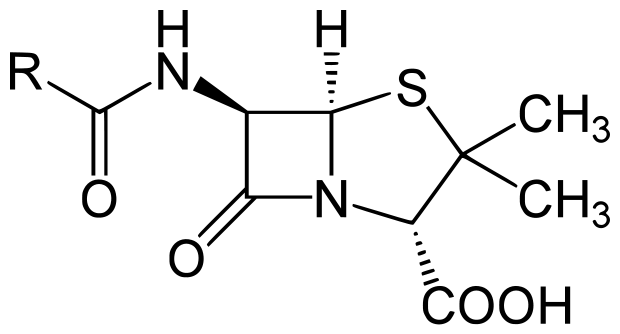
Penicillin core structure, where "R" is the variable group.Mechanism of action of the beta lactam antibiotics (penicillins and cephalosporins)

The beta-lactam antibiotics can kill susceptible bacteria. Although knowledge of the mechanism of this action is incomplete, numerous researchers have supplied information that allows understanding of the basic phenomenon (seeGhuysen, 1991; Bayles, 2000).
The cell walls of bacteria are essential for their normal growth and development. Peptidoglycan is a heteropolymeric component of the cell wall that provides rigid mechanical stability by virtue of its highly cross-linked latticework structure . In gram-positive microorganisms, the cell wall is 50 to 100 molecules thick, but it is only 1 or 2 molecules thick in gram-negative bacteria . The peptidoglycan is composed of glycan chains, which are linear strands of two alternating amino sugars (N-acetylglucosamine and N-acetylmuramic acid) that are cross-linked by peptide chains.
The biosynthesis of the peptidoglycan involves about 30 bacterial enzymes and may be considered in three stages. The first stage, precursor formation, takes place in the cytoplasm. The product, uridine diphosphate (UDP)-acetylmuramyl-pentapeptide, accumulates in cells when subsequent synthetic stages are inhibited. The last reaction in the synthesis of this compound is the addition of a dipeptide, D-alanyl-D-alanine. Synthesis of the dipeptide involves prior racemization of L-alanine and condensation catalyzed by D-alanyl-D-alanine synthetase. D-Cycloserine is a structural analog of D-alanine and acts as a competitive inhibitor of both the racemase and the synthetase .
During reactions of the second stage, UDP-acetylmuramyl-pentapeptide and UDP-acetylglucosamine are linked (with the release of the uridine nucleotides) to form a long polymer.
The third and final stage involves completion of the cross-link. This is accomplished by a transpeptidation reaction that occurs outside the cell membrane. The transpeptidase itself is membrane-bound. The terminal glycine residue of the pentaglycine bridge is linked to the fourth residue of the pentapeptide (D-alanine), releasing the fifth residue (also D-alanine) . It is this last step in peptidoglycan synthesis that is inhibited by the b-lactam antibiotics and glycopeptide antibiotics such as vancomycin (by a different mechanism than the b-lactams; ). Stereomodels reveal that the conformation of penicillin is very similar to that of D-alanyl-D-alanine. The transpeptidase probably is acylated by penicillin; that is, penicilloyl enzyme apparently is formed, with cleavage of the ¾ CO¾N ¾ bond of the b-lactam ring.
Although inhibition of the transpeptidase just described is demonstrably important, there are additional, related targets for the actions of penicillins and cephalosporins; these are collectively termed penicillin-binding proteins (PBPs). All bacteria have several such entities; for example, S. aureus has four PBPs, whereas Escherichia coli has at least seven. The PBPs vary in their affinities for different b-lactam antibiotics, although the interactions eventually become covalent. The higher-molecular-weight PBPs of E. coli (PBPs 1a and 1b) include the transpeptidases responsible for synthesis of the peptidoglycan. Other PBPs in E. coli include those that are necessary for maintenance of the rodlike shape of the bacterium and for septum formation at division. Inhibition of the transpeptidases causes spheroplast formation and rapid lysis. However, inhibition of the activities of other PBPs may cause delayed lysis (PBP 2) or the production of long, filamentous forms of the bacterium (PBP 3). The lethality of penicillin for bacteria appears to involve both lytic and nonlytic mechanisms. Penicillin’s disruption of the balance between PBP-mediated peptidoglycan assembly and murein hydrolase activity results in autolysis. Nonlytic killing by penicillin may involve holin-like proteins in the bacterial membrane that collapse the membrane potential (Bayles, 2000).

First semester pharmacology book cover written by Brynjar Bye.Download Pharmacology hand note for free

This is a hand note.....

We scan it for you....


For more Notes Please Bookmark our site

medicine for fever এর চিত্র ফলাফল 

Acetaminophen

Acetaminophen is a non-opiate, analgesic and antipyretic, prescribed for headache, pain (muscle ache, backache) and fever either alone or combined with other medications.
 

Aspirin

Aspirin is an analgesic and antipyretic, prescribed for pain, heart attack and fever. The drug decreases the substances that cause pain and inflammation.
 

Naproxen

Naproxen is a nonsteroidal anti-inflammatory drug (NSAID), prescribed for pain, fever, inflammation and stiffness due to various disease conditions.
 
Parasitomol
 

Docosanol

Docosanol is a saturated fatty alcohol, prescribed for cold sores or fever blisters.

Ibuprofen

Ibuprofen is a nonsteroidal anti-inflammatory drug (NSAID), prescribed for mild to moderate pain, inflammation and fever. This medication decreases the hormones that cause pain and inflammation in the body

The Nature of Drugs
In the most general sense, a drug may be defined as any substance that brings about a change in
biologic function through its chemical actions. In the great majority of cases, the drug molecule
interacts with a specific molecule in the biologic system that plays a regulatory role. This molecule
is called a receptor. The nature of receptors is discussed more fully in Chapter 2: Drug Receptors &
Pharmacodynamics. In a very small number of cases, drugs known as chemical antagonists may
interact directly with other drugs, while a few other drugs (eg, osmotic agents) interact almost
exclusively with water molecules. Drugs may be synthesized within the body (eg, hormones) or
may be chemicals not synthesized in the body, ie, xenobiotics (from Gr xenos "stranger"). Poisons
are drugs. Toxins are usually defined as poisons of biologic origin, ie, synthesized by plants or
animals, in contrast to inorganic poisons such as lead and arsenic.
In order to interact chemically with its receptor, a drug molecule must have the appropriate size,
electrical charge, shape, and atomic composition. Furthermore, a drug is often administered at a
location distant from its intended site of action, eg, a pill given orally to relieve a headache.
Therefore, a useful drug must have the necessary properties to be transported from its site of
administration to its site of action. Finally, a practical drug should be inactivated or excreted from
the body at a reasonable rate so that its actions will be of appropriate duration.

https://www.youtube.com/watch?v=ToQ8PWYnu04


pharmacology এর চিত্র ফলাফলPharmacology & Genetics
During the last 5 years, the genomes of humans, mice, and many other organisms have been
decoded in considerable detail. This has opened the door to a remarkable range of new approaches
to research and treatment. It has been known for centuries that certain diseases are inherited, and we
now understand that individuals with such diseases have a heritable abnormality in their DNA. It is
now possible in the case of some inherited diseases to define exactly which DNA base pairs are
anomalous and in which chromosome they appear. In a small number of animal models of such
diseases, it has been possible to correct the abnormality by "gene therapy," ie, insertion of an
appropriate "healthy" gene into somatic cells. Human somatic cell gene therapy has been attempted,
but the technical difficulties are great.
Studies of a newly discovered receptor or endogenous ligand are often confounded by incomplete
knowledge of the exact role of that receptor or ligand. One of the most powerful of the new genetic
techniques is the ability to breed animals (usually mice) in which the gene for the receptor or its
endogenous ligand has been "knocked out," ie, mutated so that the gene product is absent or
nonfunctional. Homozygous "knockout" mice will usually have complete suppression of that
function, while heterozygous animals will usually have partial suppression. Observation of the
behavior, biochemistry, and physiology of the knockout mice will often define the role of the
missing gene product very clearly. When the products of a particular gene are so essential that even
heterozygotes do not survive to birth, it is sometimes possible to breed "knockdown" versions with
only limited suppression of function. Conversely, "knockin" mice have been bred that overexpress
certain receptors of interest.
Some patients respond to certain drugs with greater than usual sensitivity. (Such variations are
discussed in Chapter 4: Drug Biotransformation.) It is now clear that such increased sensitivity is
often due to a very small genetic modification that results in decreased activity of a particular
enzyme responsible for eliminating that drug. Pharmacogenomics (or pharmacogenetics) is the
study of the genetic variations that cause individual differences in drug response. Future clinicians
may screen every patient for a variety of such differences before prescribing a drug.

Prehistoric people undoubtedly recognized the beneficial or toxic effects of many plant and animal
materials. The earliest written records from China and from Egypt list remedies of many types,
including a few still recognized today as useful drugs. Most, however, were worthless or actually
harmful. In the 2500 years or so preceding the modern era there were sporadic attempts to introduce
rational methods into medicine, but none were successful owing to the dominance of systems of
thought that purported to explain all of biology and disease without the need for experimentation
and observation. These schools promulgated bizarre notions such as the idea that disease was
caused by excesses of bile or blood in the body, that wounds could be healed by applying a salve to
the weapon that caused the wound, and so on.
Around the end of the 17th century, reliance on observation and experimentation began to replace
theorizing in medicine, following the example of the physical sciences. As the value of these
methods in the study of disease became clear, physicians in Great Britain and on the Continent
began to apply them to the effects of traditional drugs used in their own practices. Thus, materia
medica—the science of drug preparation and the medical use of drugs—began to develop as the
precursor to pharmacology. However, any understanding of the mechanisms of action of drugs was
prevented by the absence of methods for purifying active agents from the crude materials that were
available and—even more—by the lack of methods for testing hypotheses about the nature of drug
actions.
In the late 18th and early 19th centuries, François Magendie and later his student Claude Bernard
began to develop the methods of experimental animal physiology and pharmacology. Advances in
chemistry and the further development of physiology in the 18th, 19th, and early 20th centuries laid
the foundation needed for understanding how drugs work at the organ and tissue levels.
Paradoxically, real advances in basic pharmacology during this time were accompanied by an
outburst of unscientific promotion by manufacturers and marketers of worthless "patent medicines."
It was not until the concepts of rational therapeutics, especially that of the controlled clinical trial,
were reintroduced into medicine—about 50 years ago—that it became possible to accurately
evaluate therapeutic claims.
About 50 years ago, there also began a major expansion of research efforts in all areas of biology.
As new concepts and new techniques were introduced, information accumulated about drug action
and the biologic substrate of that action, the receptor. During the last half-century, many
fundamentally new drug groups and new members of old groups were introduced. The last 3
decades have seen an even more rapid growth of information and understanding of the molecular
basis for drug action. The molecular mechanisms of action of many drugs have now been identified,
and numerous receptors have been isolated, structurally characterized, and cloned. In fact, the use of
receptor identification methods (described in Chapter 2: Drug Receptors & Pharmacodynamics) has
led to the discovery of many orphan receptors—receptors for which no ligand has been discovered
and whose function can only be surmised. Studies of the local molecular environment of receptors
have shown that receptors and effectors do not function in isolation—they are strongly influenced
by companion regulatory proteins. Decoding of the genomes of many species—from bacteria to
humans—has led to the recognition of unsuspected relationships between receptor families.
Pharmacogenomics—the relation of the individual's genetic makeup to his or her response to
specific drugs—is close to becoming a practical area of therapy (see Pharmacology & Genetics).
Much of that progress is summarized in this resource.
The extension of scientific principles into everyday therapeutics is still going on, though the
medication-consuming public, unfortunately, is still exposed to vast amounts of inaccurate,
incomplete, or unscientific information regarding the pharmacologic effects of chemicals. This has
resulted in the faddish use of innumerable expensive, ineffective, and sometimes harmful remedies
and the growth of a huge "alternative health care" industry. Conversely, lack of understanding of
basic scientific principles in biology and statistics and the absence of critical thinking about public
health issues has led to rejection of medical science by a segment of the public and a common
tendency to assume that all adverse drug effects are the result of malpractice. Two general
principles that the student should always remember are, first, that all substances can under certain
circumstances be toxic; and second, that all therapies promoted as health-enhancing should meet the
same standards of evidence of efficacy and safety, ie, there should be no artificial separation
between scientific medicine and "alternative" or "complementary" medicine.


Metrology is the science of measurement.
It includes all theoretical and practical aspects of measurement.
Metrology is defined by the International Bureau of Weights and Measures (BIPE) as "the science of measurement, embracing both experimental and theoretical determinations at any level of uncertainty in any field of science and technology." The ontology and international vocabulary of metrology (VIM) is maintained by the Joint Committee for Guides in Metrology (JCGM), a group made up of eight international organisations.
Metrology is a very broad field and may be divided into three basic activities, though there is considerable overlap between the activities.
  • Definition of internationally accepted units of measurement.
  • Realisation of these units of measurement in practice.
  • Application of chains of traceability linking measurements made in practice to reference standards.
Metrology also has three basic subfields, all of which make use of the three basic activities, though in varying proportions:
  • Scientific or fundamental metrology
  • Applied, technical or industrial metrology
  • Legal metrology

Powered by Blogger.

Visitors

Print Friendly Version of this pagePrint Get a PDF version of this webpagePDF


 download University Notes apps for android

Popular Posts

Flag Counter